The Gentle Tug of War, October 2026 UK Property Market
Hello there! I’m Darren Medland. I was chatting with a neighbour near null the other day, and they asked me something that really stuck: "Darren, is the housing market a bit like the weather? Does a storm in London mean we’ll all be getting wet up here?"
It’s a brilliant way to look at it. Just like a breeze moving across the coast, what happens to the big UK property picture eventually reaches our front doors in null. So, let’s grab a cuppa and look at what’s happening across the country this October.
Imagine a young couple—let’s call them Sarah and Tom. They’ve been saving for years, watching the news, and waiting for the "right time." Right now, Sarah and Tom are part of a national trend where things are feeling a bit more predictable, even if they aren't exactly rushing.
The Price of a Family Home Did you know that back in May 2021, the average UK home cost around £246,030? Fast forward to today, October 2026, and that figure has climbed to £288,279. In the last month alone, prices nudged up by about £330. It’s not a giant leap, but it’s a steady crawl upwards. Over the last year, prices have grown by 1.2%. To put that in perspective, if your house was a bar of chocolate, it would be just a tiny bit bigger than it was last October—nothing to make your jaw drop, but certainly not shrinking!
The "Freeze" at the Bank The big boss of money, the Bank of England, hasn’t moved their main interest rate since 18 December 2025. It’s been sitting at 3.75% for almost a year now. Why does that matter to Sarah and Tom? Because it makes the cost of their monthly mortgage feel familiar. When rates stay the same, the "price" of borrowing money stops jumping around, which helps people plan their food shops and energy bills with a bit more confidence.
A Quiet Confidence We measure how "busy" the market is by looking at mortgage approvals—basically, how many people have been told "yes" by a bank to buy a new home. This month, 54,900 people got the green light. That’s a bit lower than the 58,200 we saw in September. It’s as if the market has taken a deep breath and slowed its pace slightly as we head into the colder months.
Why does this matter for us in null? You might wonder why we talk about national averages when we live in null. Think of the national market like the tide. When the tide comes in across the UK—driven by those interest rates and big national trends—it lifts all the boats in every harbour, including ours.
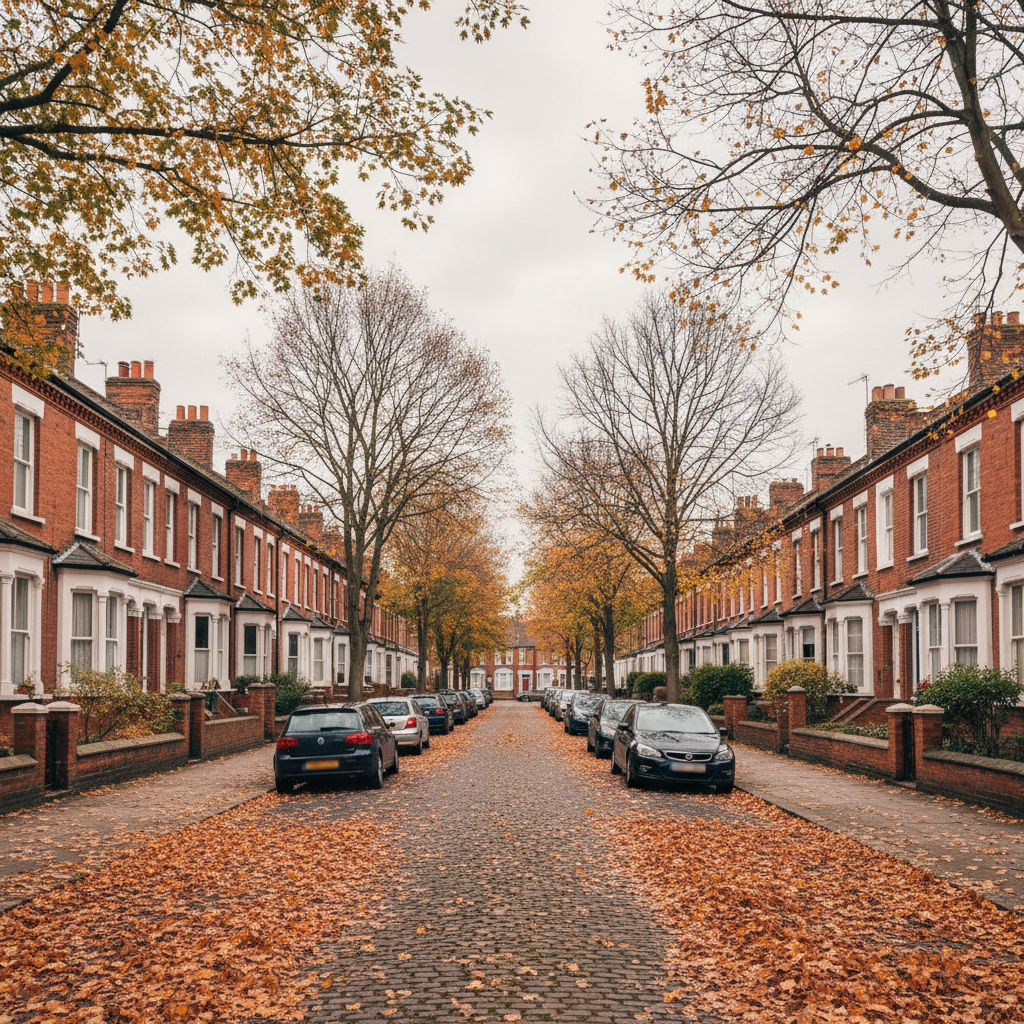
Even though our local prices in null follow their own rhythm, the "mood" of the country affects us. When banks are lending steadily nationwide, it means a buyer looking at a terrace house in null feels just as confident as someone looking at a flat in a big city. The national trend is the "mood," and the local market is the "reality" on your street.
What’s next? As we move further into autumn, the UK market looks remarkably steady. With wages growing at 3.7%—which is faster than house prices are rising—homes are becoming just a tiny bit more affordable for people like Sarah and Tom. For anyone in null thinking of moving, the message is clear: the "stormy" days of wild price swings seem to be behind us, replaced by a calm, steady autumn breeze.